
MEET OUR FALL 2025 GRADUATE STUDENT SPOTLIGHTS
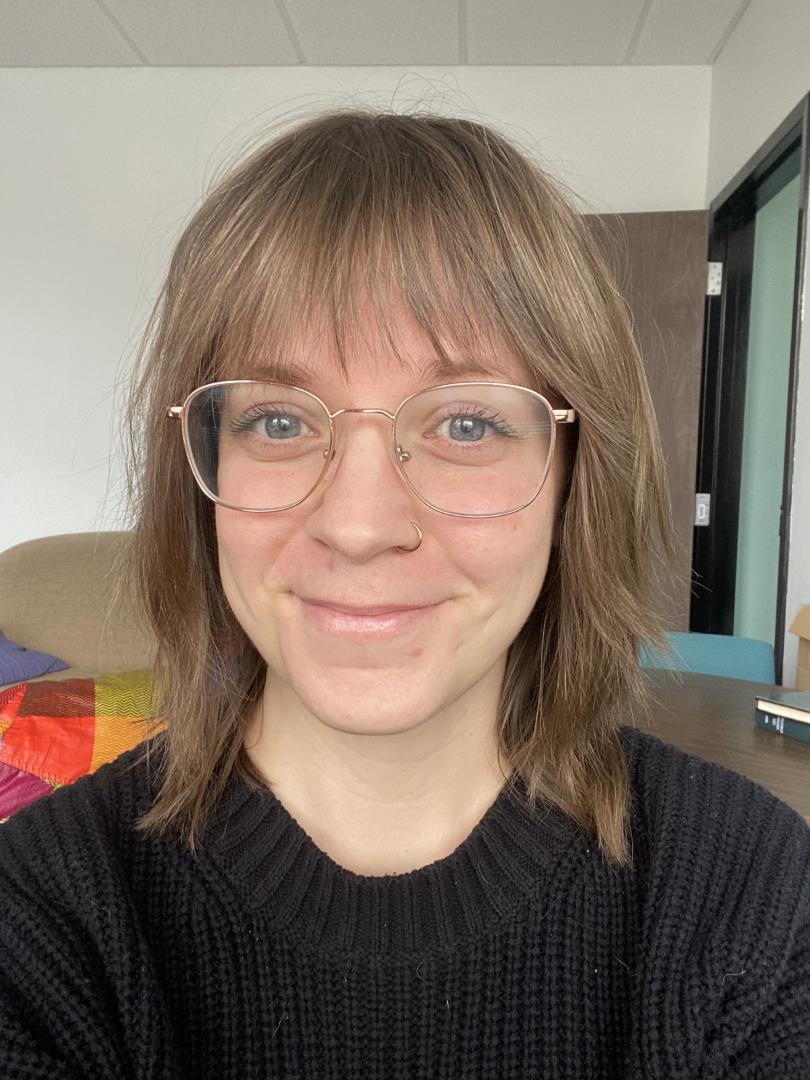
Kimberly Cook
In the next year.
When I read Robbie’s recruitment post on a listserv, I could not have described my research interests more to a T. So, the research lured me in. Proximity to family was a huge plus, and the department is overall really friendly.
I grew up in southern Indiana and eastern Pennsylvania.
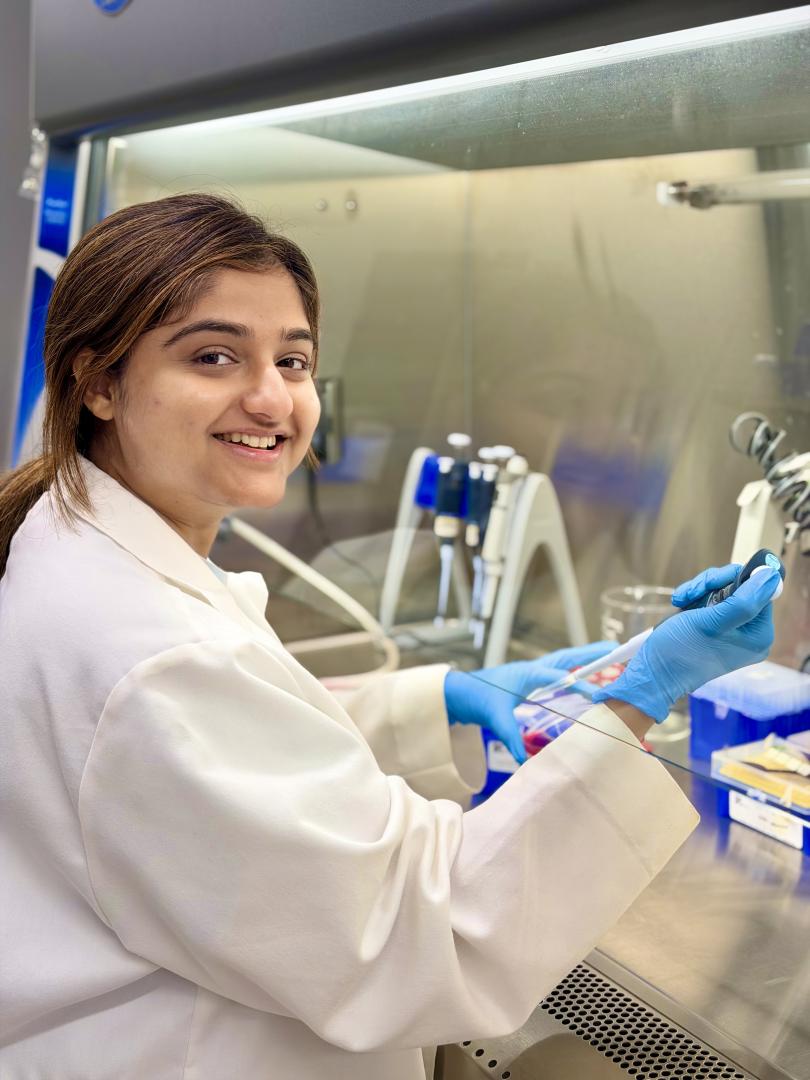 Sajina Dhungel
When do you graduate?
I plan to graduate in Spring 2026.
What motivated you to come to the UK’s Department of Biology?
I am drawn to the Department of Biology for its research on cellular signaling networks that regulate adult stem cell behavior and tissue regeneration.
Where are you from?
I am from Nepal.
Do you have any mentors or professors who significantly impacted your life in biology?
My professors during my undergraduate and master’s programs played a major role in shaping my growth as a biologist, nurturing my curiosity and encouraging critical thinking. As I continue to engage with faculty and researchers in the Department of Biology, I find myself even more inspired. Their passion for discovery and depth of insight continue to broaden my perspective on science and its potential to create meaningful impact.
Describe your journey here in the department so far.
My journey in the Department of Biology has been incredibly rewarding. As an international student adapting to a new culture and environment, I have always felt welcomed and supported by a community grounded in kindness and respect. I am grateful for the opportunities to learn, explore and be part of such a vibrant academic environment.
What are you most proud of or excited about?
I am most proud of my ability to adapt and thrive in a new environment far from home. Living and studying abroad has strengthened my resilience and independence and has helped me grow both personally and intellectually.
How did you overcome challenges that you may have faced?
I sought advice and support from my mentors, lab mates, friends and family.
What are you currently researching?
I am currently studying how nutrient-sensing pathways influence adult stem cell behavior and tissue regeneration. My research focuses on understanding how the PAS Kinase (a nutrient-sensitive protein kinase) structure, activity and localization are regulated in stem cells and how this mechanism influences stem cell fate.
Whose lab are you working in?
I am working in Dr. Chintan Kikani’s Lab.
What do you hope to gain from it?
I hope to become a more skilled and thoughtful scientist who can contribute meaningfully to the field of regenerative biology.
What could you have benefited from in the department that you feel you were missing? For example, if the department could provide you with an additional resource to better your training here, what would it be?Although the department provides excellent research training, I feel I could have benefited from additional professional development opportunities.
Describe any highlights or memorable moments here in the department.
Teaching my first class as a TA was a memorable moment. It challenged me to step out of my comfort zone and helped me grow as a communicator and scientist.
Have you recently received any awards, accolades or recognitions?
I recently received the Morgan Fellowship from the Department of Biology. Before this, I was awarded a travel fellowship to attend and present at the FASEB Protein Phosphorylation Conference in Steamboat Springs, Colorado.
Who do you look up to and why?
I look up to my parents. Their encouragement and sacrifices have shaped my determination to pursue higher education and overcome difficult challenges.
How do you spend your free time?
I enjoy spending my free time cooking, running and hanging out with friends.
What are your plans after graduating? Where do you see yourself in 5 years? 10 years?
I plan to work as a research scientist in a research laboratory or industry. In the coming years, I see myself continuing to explore and unravel regenerative mechanisms with the long-term goal of contributing to the development of therapeutic medicines.
If you could give advice to an undergraduate biology student, what would that be?
I encourage undergraduate students to get involved in research by joining a faculty lab because it is a great way to gain valuable experience and discover what excites you.
If you could only eat one food for the rest of your life, what would it be?
I could eat Momo every day and never get tired.
If you could meet one famous person, dead or alive, who would it be and why?
Thomas Hunt Morgan, because his pioneering work in genetics fundamentally changed our understanding of heredity and laid the foundation for modern molecular biology.
If you could share one statement about your experience as a UK Biology graduate student so far, what would it be?
I’m incredibly grateful to the mentors, mentees, support staff, and friends in the UK Biology Department, whose support has made my Ph.D. journey meaningful and fulfilling.
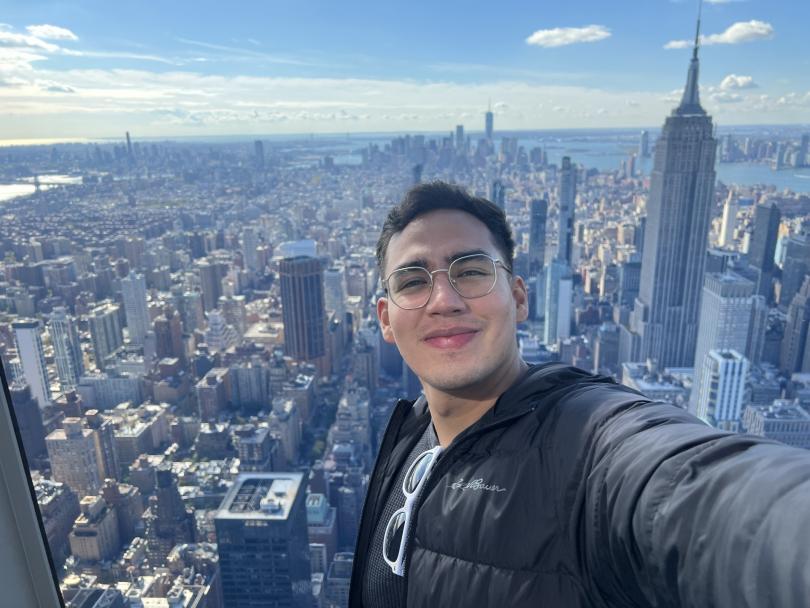 Emilio Oviedo Rivadeneira
When do you graduate?
My plan is to graduate next year at the end of my fifth year
What motivated you to come to UK’s department of biology?
I learn about the department in a Developmental Biology course in Chile. A former student of my current PI (Dr. Seifert) talked to me about the opportunities I could find here. As soon as I started digging into it, I found a very diverse department with students from all over the world studying regeneration on various animal models and I instantly felt keen to join. Moreover, I was looking for an adviser who is successful, supportive and caring, and I did find that in my PI. So, I feel very lucky.
Where are you from?
I am from the country of the four worlds: Ecuador, more specifically from Quito, also known as “La carita de Dios” Little face of God or “Luz de America” Light of America.
Do you have any mentors or professors who significantly impacted your life in biology?
I do have a lot of mentors that have impacted my journey in biology, starting with my undergrad mentor, Andres, who taught me the basis of scientific research and the importance of creativity and freedom when asking scientific questions. Others like Eugenia, Federico, Jaime, Beth, Chintan, Bob and Alejandro who have inspired me to maintain that curiosity firing and have been critical for my scientific growth. And, of course, Ashley who has taught me the importance of having fun while doing science, and at the same time building the critical thinking and rigor needed to identify the enduring and outstanding questions that have puzzled scientists over the years.
Describe your journey here in the department so far. What are you most proud or excited about? How did you overcome challenges that you may have faced?
I am excited to publish my first papers and share what I have discovered with the world
I think my biggest challenge has been being away from my family and culture. I have face this by going home at least once per year and maintaining contact with them all the time. Also, building community here has been very helpful.
What are you currently researching?
I am working in Dr. Seifert’s lab. We study regeneration using a comparative approach. Specifically, comparing the regenerative abilities of the spiny mouse with laboratory mice, which heal by fibrotic repair. I have focused my Ph.D. research on understanding the intrinsic cellular differences between these species with the aim of figuring out why most mammals cannot regenerate and how can we induce regeneration on them.
What could you have benefitted from in the department that you feel you were missing? For example, if the department could provide you with an additional resource to better your training here, what would it be?
While the department does not have every resource or facility, the university is pretty big, and you can find any equipment you need and collaborate with other labs very easily.
Describe any highlights or memorable moments here in the department.
I think the biggest highlight for me was giving my fourth-year talk. I enjoyed a lot preparing myself for that talk and when it was done people was very excited about it and that made feel very happy and proud.
Who do you look up to and why?
I don’t think I have someone that I look up to, at least for now, but if I can say something bold, I would say that I look up to the person I hope to be in 10 years. Thinking long-term works for me.
How do you spend your free time?
I am a very sporty person. I enjoy hitting the gym, climbing, running and playing soccer.
What are your plans after graduating? Where do you see yourself in 5 years? 10 years?
My plan for now is to stay in the academic world. Hopefully, I'll finish my post-doc five years from now and then start my own lab to pursue the questions that keep my curiosity afloat.
If you could give advice to an undergraduate biology student, what would that be?
Organization. Organizing your next month or next week makes everything so much easier and more enjoyable.
If you could only eat one food for the rest of your life, what would it be?
Encebollado. It’s an onion and fish soup that concentrates all the marine flavor in one plate. It is from the Ecuadorian coast, and I never miss it when I go back home.
If you could meet one famous person, dead or alive, who would it be and why?
I would say Albert Einstein. Even though he is not a biologist, I would love to understand his way of thinking and viewing the world.
If you could share one statement about your experience as a UK Biology graduate student so far, what would it be?
Life changing in many ways