
By Richard LeComte
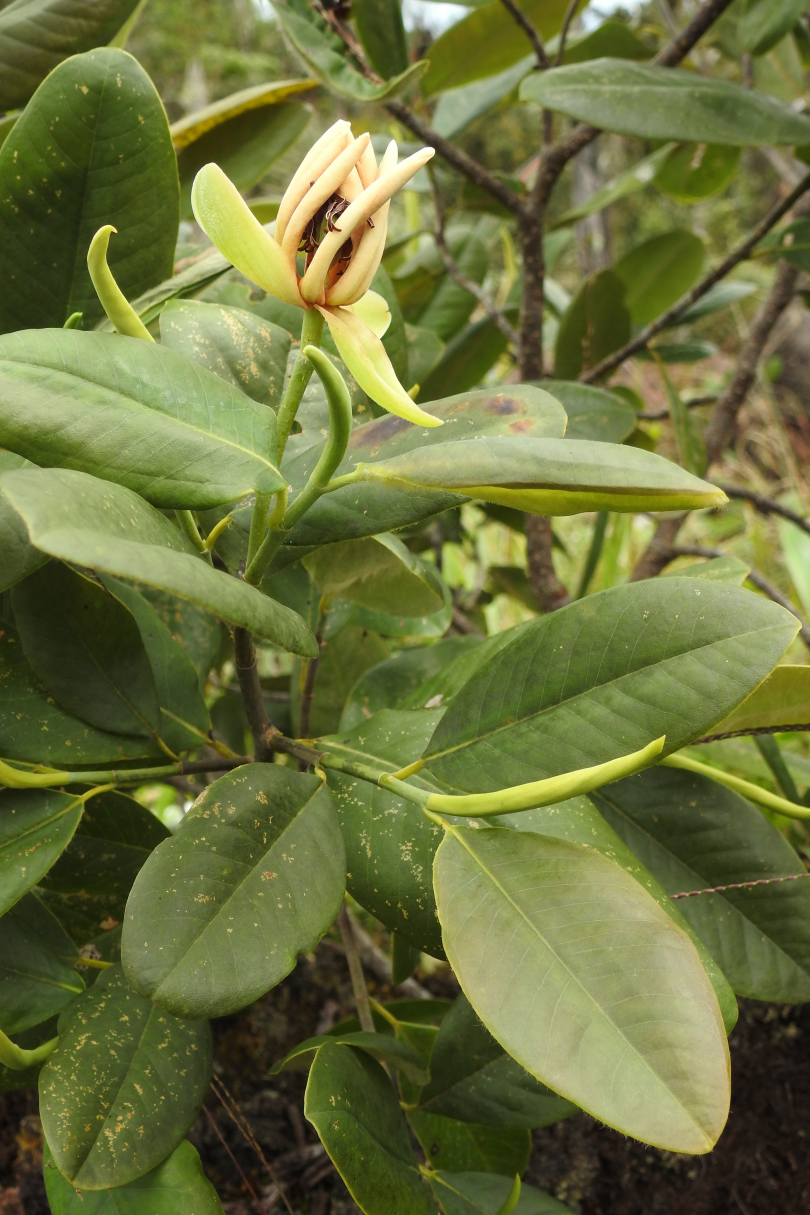
LEXINGTON, Ky. -- A University of Kentucky doctoral student dug deeply into the Tapichalaca reserve in Ecuador and uncovered a magnolia tree variety that’s different enough from other types to be called its own species: Magnolia tapichalacaensis.
The tree’s big flowers attracted the attention of Edison Rea-Sancho, a doctoral student in biology in UK’s College of Arts and Sciences. He recently co-wrote a paper for the journal Phytotaxa.
“Plants are awesome," Rea-Sancho said. “I am from Ecuador, and I grew up surrounded by plants. Being in the tropical rain forest made me curious about plants and trees. Among all these plants, all these trees that are there, the magnolia is the one that caught my attention for the last, I would say, five years. I have been wondering what's going on with these trees. They have these big flowers and they look similar to other magnolia trees, but if you pay enough attention, you will see that they are a completely different species.”
And Rea-Sancho did pay attention. He and his colleagues found specimens of Magnolia tapichalacaensis on an expedition into the reserve in South Ecuador. The article notes that the researchers found a group of about a dozen fully grown and younger specimens of this new magnolia. Also, further explorations of South American biomes are producing more discoveries of species.
But how do researchers conclude that this particular magnolia tree is a different species? Rea-Sancho is working with Rosana Zenil-Ferguson, Ph.D., assistant professor of biology at UK and a co-author on the paper. She studies botany, speciation and evolution, and she points out that scientists have a number of ways of determining when a new species is discovered. A lot of factors count in identifying a species, including environment, morphological structure and, deep down, the plant’s molecules.
"We have to go to different levels,” she said. “It’s not only their morphological structure. We have to look also into the ecology of the plants. Where are they located? Are there physical barriers, like mountains versus valleys, or elevational differences that might separate these plants from other magnolias?”
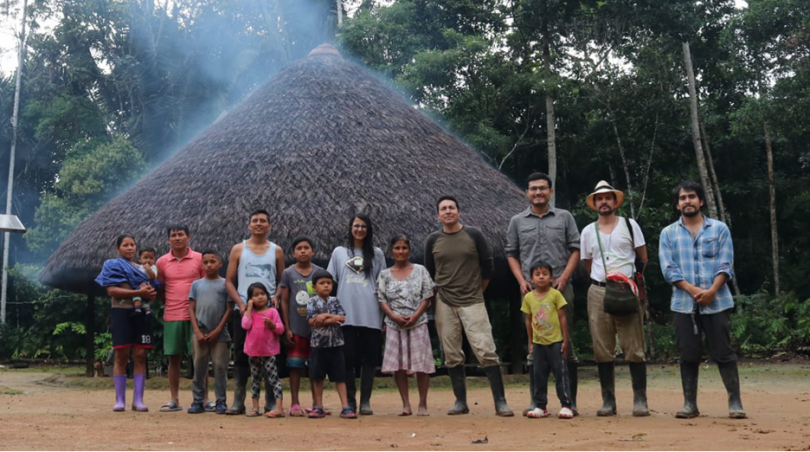
And so Rea-Sancho and his colleagues have examined this magnolia closely. These trees do things differently from other magnolias. In terms of this new magnolia’s structure and adaptations, Rea-Sancho noted that the environment of the reserve might have caused these trees to adapt in ways to regulate their temperatures and to better lure pollinators.
“The interaction between the tree and insects in the species Magnolia tapichalacaensis is poorly understood,” he said. “Insect interactions with flowers and temperature occur in other Magnolia species. We have not reported the same for this species.”
An investigation on the molecular level helps seal this tree’s status as a new species. He hopes to defend in about two years.
“He’s looking at the molecular level in both magnolia populations,” Zenil-Ferguson said. “He’s going to make sure that there’s a variation in a populations’ DNA, and also checking if that variation matches any other species that might be closely related to or have common ancestry.”