
MEET OUR SPRING 2026 GRADUATE STUDENT SPOTLIGHTS
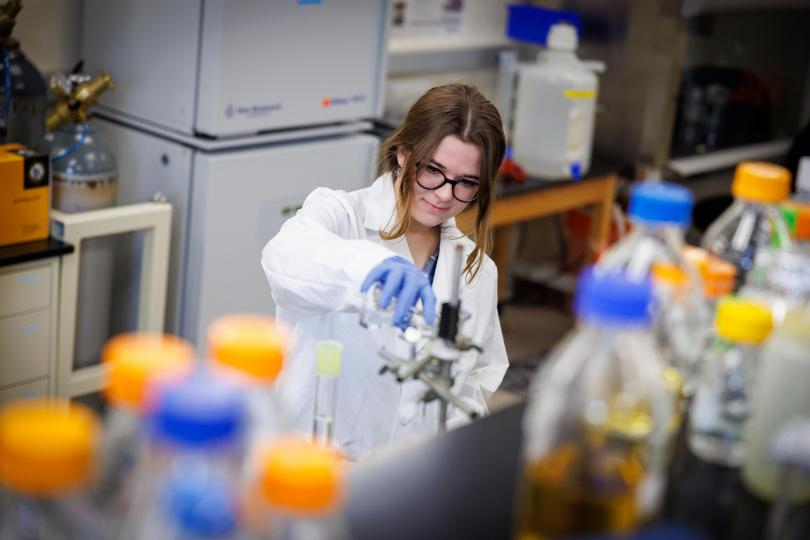 Sarah Stasel
When do you graduate?
I expect to complete my Ph.D. next year (2027).
What motivated you to come to UK’s Department of Biology?
I was drawn to the diversity of science being performed in the department. I knew I ultimately wanted to do research on microbes in a biology department because of the broad expertise available.
Where are you from?
I am from Kentucky. Specifically, I am from Hart County.
Do you have any mentors or professors who significantly impacted your life in biology?
I have had several mentors who influenced my journey in biology. I was encouraged to pursue a degree in biology by nonmajors biology lab instructor Amanda Seaton at Elizabethtown Community and Technical College (ECTC). Similarly, my microbiology professors, Dr. Joe Wolf (at ECTC) and Dr. Rodney King (at Western Kentucky University (WKU)), were very supportive in my pursuit of a PhD. Dr. Wolf is an alumnus of this department, and he encouraged me to apply here. My former instructor and TA coordinator Naomi Rowland (at WKU) really helped to prepare me for a lot of the responsibilities that come with graduate school by encouraging academic writing, critical thinking and thoughtful experimental design, and good pedagogy. Lastly, another former TA coordinator Dr. Sigrid Jacobshagen introduced me to her circadian rhythm research and encouraged my interest in applying here to work on circadian rhythms in non-photosynthetic bacteria.
Describe your journey here in the department so far. What are you most proud or excited about? How did you overcome challenges that you may have faced?
Graduate school is an extremely demanding and equally rewarding experience. My journey in this department has required a lot of personal sacrifices to get where I am today.
I am excited to finish my first manuscript and share my work with the world.
I deal with challenges that I face by taking some time to reflect and assess what I need in order to overcome them. If it is a challenge that I know I need assistance with, I will then bring in my partner, graduate student friends, or faculty in the department depending on the type of challenge.
What are you currently researching? Whose lab are you working in? What do you hope to gain from it?
I am working on understanding the circadian clocks driving biological rhythms of physiology, behavior and gene expression in non-photosynthetic bacteria. In simpler terms, I want to know how single-celled organisms delegate certain activities to specific times of day.
I work in two labs! My primary position is in Dr. Vincent Cassone’s lab in biology. I also work in Dr. Carrie Shaffer’s lab in veterinary sciences.
After four years of being in their labs, I have gained a lot of knowledge in the fields of circadian rhythms and bacterial pathogenesis. I have developed a lot as an independent researcher and gained experience leading research projects in the lab. What I still hope to gain from these labs is academic writing skills and how to select journals to publish your research in.
What could you have benefitted from in the department that you feel you were missing? For example, if the department could provide you with an additional resource to better your training here, what would it be?
When I first started my Ph.D., there was a lack of microbiology tenure track faculty. It meant that I had to take a few classes outside our department to get the experience I needed to conduct my research. In general, I think as a department we also need microbiology graduate level courses. While I enjoyed the ones provided in the medical school, they were very clinically focused. I think the department would benefit from a microbial ecology or microbial behavior course. Or a course dedicated to studying extremophiles.
Describe any highlights or memorable moments here in the department.
My biggest highlight is from last summer. I was invited to serve as a co-leader for a study abroad course with Dr. Erin Richard. The course took place in Amsterdam and covered global health and infectious diseases. It was a great opportunity to experience another culture along with our students.
Have you recently received any awards, accolades or recognitions? If so, please describe the award/recognition.
I was awarded the Association of Emeriti Faculty Endowed Fellowship through the graduate school for this semester. I was invited to give a brief talk about my graduate research and teaching philosophy at the association’s spring luncheon meeting in February. My abstract was also accepted for an invited talk at the Society for Research on Biological Rhythms (SRBR) Biennial Meeting this May.
Who do you look up to and why?
I look up to both of my mentors. Dr. Cassone has so much experience and has a expansive amount of knowledge. Dr. Shaffer is also very experienced in microbiology is a great role model as a woman in STEM.
How do you spend your free time?
I spend time with my partner and our cat, Gabby.
What are your plans after graduating? Where do you see yourself in 5 years? 10 years?
I hope five years from now, I will have been in my postdoc for about four years and actively seeking jobs in academia. In 10 years, I hope to have my own lab and mentor the next generation of physicians and scientists through their biology studies.
If you could give advice to an undergraduate biology student, what would that be?
Do not be afraid to speak to your professors/TAs. I think that is one of the major reasons I am here today. Without the advice and encouragement from my former instructors and TAs, my education and career trajectory would have been very different.
If you could only eat one food for the rest of your life, what would it be?
Homemade spaghetti.
If you could meet one famous person, dead or alive, who would it be and why?
Steve Irwin. His show was something I really enjoyed growing up with and encouraged my fascination with wildlife. I think the values he exuded really shaped me into the person I am today.
If you could share one statement about your experience as a UK Biology graduate student so far, what would it be?
The days are long, but the years go by so fast.
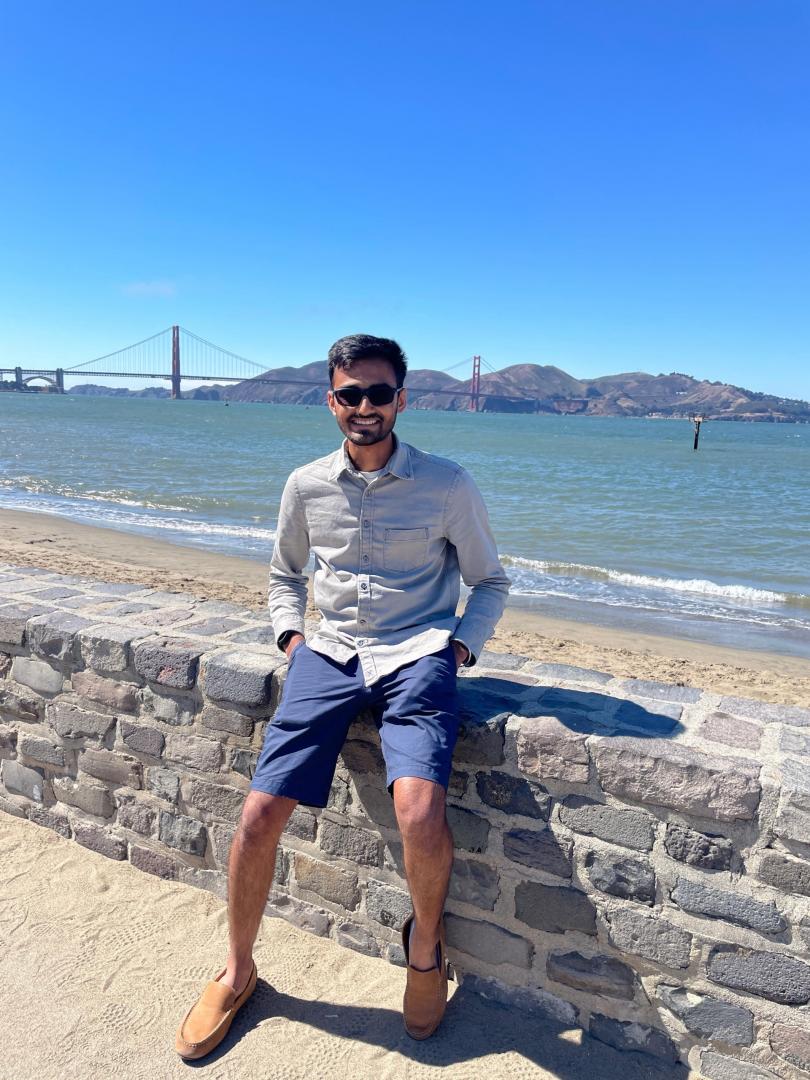 Meet Patel
When do you graduate?
July 2026
What motivated you to come to UK’s department of biology?
The breadth of research capabilities and the kind sharing environment of the biology department.
Where are you from?
I am originally from a small village named Umbhel in India. I did my high school in Surat India and then I came to the US to pursue my B.S. at Troy University in Alabama and now here at UK for grad school.
Do you have any mentors or professors who significantly impacted your life in biology?
My mentor Dr. Jakub Famulski! Hands down the best mentor/research adviser/PI I have ever had! It takes a delicate balance to train a student to be independent yet guide them through when they are lost – and Dr. Famulski has perfected the very art of training students!
Describe your journey here in the department so far. What are you most proud or excited about? How did you overcome challenges that you may have faced?
I am most proud of the progress I have made – regardless of my research impact on our understanding of photoreceptor biology, I have come a long way both as a scientist and as a person and that’s Big thanks to my PI Dr. Jakub Famulski. Lastly, my research has shown me how beautiful and delicate the photoreceptor biology truly and what keeps me up at night are the several cool proteins that allow the photoreceptor to perform the most coolest job of converting light into meaning signals.
Any research training will have its set of challenges and obstacles. Some skills that I have gained through these challenges have been:
- To learn from the setback and how they came about.
- Dig into the literature and see how others have worked on it.
- Although easier said than done but by being persistent and not giving up.
What are you currently researching?
I am currently studying how mutations in certain gene candidates lead to Photoreceptor degeneration in humans and how we can understand their disease etiology using zebrafish.
Whose lab are you working in?
Dr. Jakub Famulski
What do you hope to gain from it?
Having been in the lab for over five years I can comfortably say I have grown as a scientist and as a person, but more importantly I have gained friendships in the people I have had the opportunity to work with and train, and for that I am eternally grateful!
What could you have benefitted from in the department that you feel you were missing?
For example, if the department could provide you with an additional resource to better your training here, what would it be? I don’t think the department lacks any specific quality or a resource per say, but I think having more ways to access and connect with other departments and their resources can make the training more efficient – for instance establishing a departmental connection for biology folks to use a core facility such as the electron microscopy core.
Describe any highlights or memorable moments here in the department.
My favorite departmental highlights are the summer BGSA BBQs and the football tailgating events.
Have you recently received any awards, accolades or recognitions? If so, please describe the award/recognition.
Morgan Fellowship – Fall 2024
Who do you look up to and why?
I look up to Dr. Roger Tsien, a famous biochemist who has a great legacy of working on fluorescent proteins and cool microscopy tools while being an excellent teacher and having a great personality.
How do you spend your free time?
I spend my free time hanging out with friends by organizing hikes (mostly at the Red River gorge), try new restaurants in Lexington, and playing variety of sports including rock climbing, tennis and cricket.
What are your plans after graduating? Where do you see yourself in five years? 10 years?
My plan is to defend my research by July 2026 and start medical school at the University of Kentucky College of Medicine July 2026. I have loved the field of retina and photoreceptor biology and have had personal connections with kids suffering through a spectrum of blinding diseases. My goal is to pursue ophthalmology post medical school all while continuing to my connection with the UK Biology Department and Dr. Jakub Famulski to continue unraveling the complexities of photoreceptors.
If you could give advice to an undergraduate biology student, what would that be?
If you are a curious and a hard-working student then consider joining a research lab in the UK Biology Department. As far early as I can remember – I have loved asking questions all while gaining knowledge and learning new techniques because life is too short to be satisfied – and perhaps that is the reason why I have dedicated so much to research. Although not everyone may enjoy research, but in my opinion, there is always something to admire in chasing the unknown and to push our understanding of the cool biology we have come to learn!
If you could only eat one food for the rest of your life, what would it be?
That would be mom’s Daal Bhaat – it’s a dish made of lentils and spices served with rice.
If you could meet one famous person, dead or alive, who would it be and why?
I think it would be cool to meet and learn about fun biochemistry and molecular biology from Dr. Roger Tsien.
If you could share one statement about your experience as a UK Biology graduate student so far, what would it be?
It has been an impeccable experience with heavy influence of my PI Dr. Jakub Famulski and all the kind Biology departmental folks.
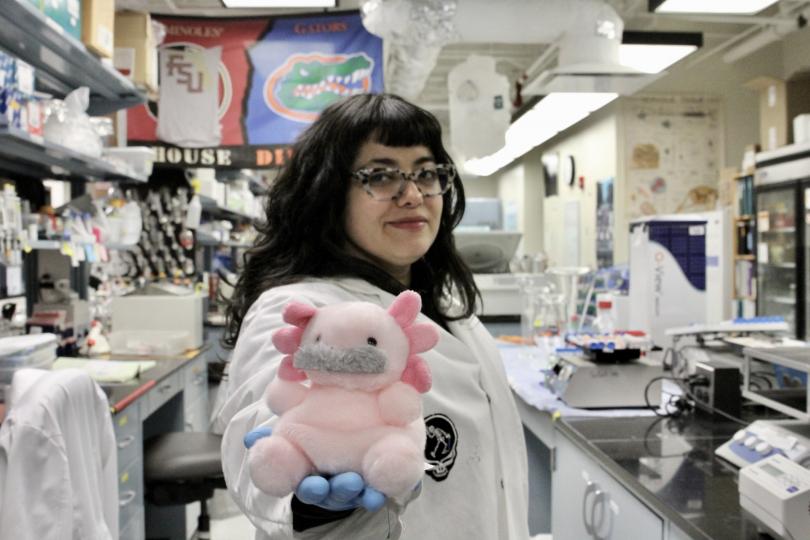 Brianda López Aviña
When do you graduate?
I expect to complete my Ph.D. by the end of this year
What motivated you to come to UK’s department of biology?
I came to the University of Kentucky specifically to work with Dr. Seifert on axolotl limb regeneration. However, I recognize that the excellent academic environment, both inside and outside my laboratory, and the diversity of fields within our department are what have made my time here so enjoyable.
Where are you from?
Proudly born in the land of mariachi; Jalisco, and raised in Mexico City. Both in Mexico.
Do you have any mentors or professors who significantly impacted your life in biology?
My high school biology teacher, Fernando Soriano, helped me embrace this passion for science, specifically biology. The same goes for every one of my professors while I was pursuing my bachelor's degree at UNAM (National Autonomous University of Mexico). All of them served as an inspiration, opening up a world that was entirely unknown to me as the first woman of my family to go to College and person to complete graduate studies.
Describe your journey here in the department so far. What are you most proud or excited about? How did you overcome challenges that you may have faced?
To be honest, I can't imagine doing anything other than science, which for me, is another way to make art. Also, art is a part of who I am. What I have enjoyed most is having the opportunity to infuse my passion for knowledge into social activities such as teaching new students, collaborating with colleagues, and the chance to discover new places, people, personalities, and cultures through doing science.
I am a fervent believer that success is not merely personal, but collective. Pursuing a doctorate is a transformative journey, one filled with challenges that entail their own unique sacrifices, moments of loss, and joys, and I believe that living this journey alongside others is precisely what makes it a success. I have overcome challenges and obstacles thanks to the incredible group of people who are my support network.
What are you currently researching? Whose lab are you working in? What do you hope to gain from it?
Currently, I am conducting my project on the role of retinoic acid on cellular behavior during limb regeneration in Dr. Ashley Seifert's laboratory. Through this work, I hope to contribute to our understanding of limb regeneration in the axolotl, but importantly, to understand how cells know their position within a three-dimensional field, such as a limb, and how they interact with one another to establish a pattern.
What could you have benefitted from in the department that you feel you were missing? For example, if the department could provide you with an additional resource to better your training here, what would it be?
Spaces for discussing the philosophy of science. I believe that, as future scientists, it is important to nurture our thinking and normalize deep questioning.
Describe any highlights or memorable moments here in the department.
The White Elephant event during December. I enjoyed it so much. I thought it was great to see the whole department together exchanging gifts.
Have you recently received any awards, accolades or recognitions? If so, please describe the award/recognition.
Recently, I was awarded with the 2025 Outstanding TA Award and the Best Poster Presentation Award from the International Society of Regenerative Biology at the conference held in Madison, Wisconsin.
Who do you look up to and why?
I admire my mother for her great strength and guidance in the face of adversity. Without a doubt, I can say that thanks to her, I have come so far!
How do you spend your free time?
Singing, dancing, discovering new music, thrifting, recently doing creative/street photography, and being a social butterfly haha.
What are your plans after graduating? Where do you see yourself in five years? 10 years?
Continuing my training with a postdoc and hoping to be running a lab group myself.
If you could give advice to an undergraduate biology student, what would that be?
Don’t underestimate the power of building your own support group. They are the ones who will be by your side and helping you when things get tough.
If you could only eat one food for the rest of your life, what would it be?
Two Mexican dishes: *sopa de fideo* and *milanesa*
If you could meet one famous person, dead or alive, who would it be and why?
David Stocum! He is a Dev Bio and regeneration legend. I am a fan of the way he wrote his articles; he philosophized about concepts of positional information and possessed a special talent for translating complex ideas and models regarding pattern formation into words.
If you could share one statement about your experience as a UK biology graduate student so far, what would it be?
Loved so much to be here, thanks to all for the support and show me how to be a better scientist. I’ll miss you!