Ribble Endowment Seminar
"Behavioral Disease Ecology Across Scales from Individuals to Populations"
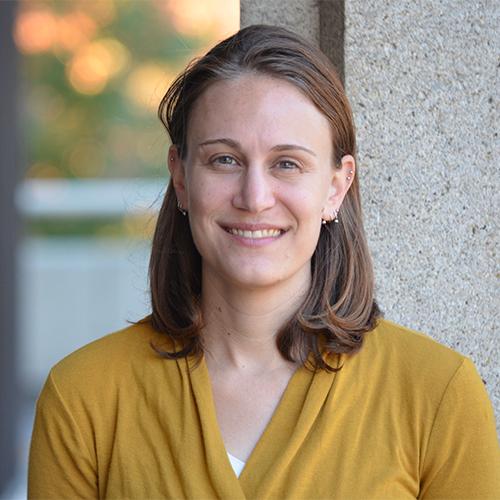
Dr. Nick Keiser | Keiser Lab
Bio:
Nick Keiser is a behavioral disease ecologist interested in how behavioral trait variation can influence infectious disease dynamics. His mentees study questions at the nexus of animal behavior, parasitology and disease ecology in a variety of such (mostly invertebrate) study systems as flies, spiders, ticks, snails and their associated parasites.
Abstract:
The fields of animal behavior and infectious disease are both typified by heterogeneity. Differences among individuals, between social groups and between populations in their behavioral trait compositions can all alter the dynamics of infectious diseases. In this seminar, I will address how animal behavior can alter host-pathogen interactions across different scales from individuals to populations in several study systems. These study systems will weave three tales on behavioral trait diversity, behavioral parasitology, and parasite manipulation of host behavior.
Watch the seminar here!

"Behavioral Disease Ecology Across Scales from Individuals to Populations"
Dr. Nick Keiser | Keiser Lab
Bio:
Nick Keiser is a behavioral disease ecologist interested in how behavioral trait variation can influence infectious disease dynamics. His mentees study questions at the nexus of animal behavior, parasitology and disease ecology in a variety of such (mostly invertebrate) study systems as flies, spiders, ticks, snails and their associated parasites.
Abstract:
The fields of animal behavior and infectious disease are both typified by heterogeneity. Differences among individuals, between social groups and between populations in their behavioral trait compositions can all alter the dynamics of infectious diseases. In this seminar, I will address how animal behavior can alter host-pathogen interactions across different scales from individuals to populations in several study systems. These study systems will weave three tales on behavioral trait diversity, behavioral parasitology, and parasite manipulation of host behavior.
Watch the seminar here!

"Behavioral Disease Ecology Across Scales from Individuals to Populations"
Dr. Nick Keiser | Keiser Lab
Bio:
Nick Keiser is a behavioral disease ecologist interested in how behavioral trait variation can influence infectious disease dynamics. His mentees study questions at the nexus of animal behavior, parasitology and disease ecology in a variety of such (mostly invertebrate) study systems as flies, spiders, ticks, snails and their associated parasites.
Abstract:
The fields of animal behavior and infectious disease are both typified by heterogeneity. Differences among individuals, between social groups and between populations in their behavioral trait compositions can all alter the dynamics of infectious diseases. In this seminar, I will address how animal behavior can alter host-pathogen interactions across different scales from individuals to populations in several study systems. These study systems will weave three tales on behavioral trait diversity, behavioral parasitology, and parasite manipulation of host behavior.
Watch the seminar here!

"Behavioral Disease Ecology Across Scales from Individuals to Populations"
Dr. Nick Keiser | Keiser Lab
Bio:
Nick Keiser is a behavioral disease ecologist interested in how behavioral trait variation can influence infectious disease dynamics. His mentees study questions at the nexus of animal behavior, parasitology and disease ecology in a variety of such (mostly invertebrate) study systems as flies, spiders, ticks, snails and their associated parasites.
Abstract:
The fields of animal behavior and infectious disease are both typified by heterogeneity. Differences among individuals, between social groups and between populations in their behavioral trait compositions can all alter the dynamics of infectious diseases. In this seminar, I will address how animal behavior can alter host-pathogen interactions across different scales from individuals to populations in several study systems. These study systems will weave three tales on behavioral trait diversity, behavioral parasitology, and parasite manipulation of host behavior.
Watch the seminar here!

"Behavioral Disease Ecology Across Scales from Individuals to Populations"
Dr. Nick Keiser | Keiser Lab
Bio:
Nick Keiser is a behavioral disease ecologist interested in how behavioral trait variation can influence infectious disease dynamics. His mentees study questions at the nexus of animal behavior, parasitology and disease ecology in a variety of such (mostly invertebrate) study systems as flies, spiders, ticks, snails and their associated parasites.
Abstract:
The fields of animal behavior and infectious disease are both typified by heterogeneity. Differences among individuals, between social groups and between populations in their behavioral trait compositions can all alter the dynamics of infectious diseases. In this seminar, I will address how animal behavior can alter host-pathogen interactions across different scales from individuals to populations in several study systems. These study systems will weave three tales on behavioral trait diversity, behavioral parasitology, and parasite manipulation of host behavior.
Watch the seminar here!

"Behavioral Disease Ecology Across Scales from Individuals to Populations"
Dr. Nick Keiser | Keiser Lab
Bio:
Nick Keiser is a behavioral disease ecologist interested in how behavioral trait variation can influence infectious disease dynamics. His mentees study questions at the nexus of animal behavior, parasitology and disease ecology in a variety of such (mostly invertebrate) study systems as flies, spiders, ticks, snails and their associated parasites.
Abstract:
The fields of animal behavior and infectious disease are both typified by heterogeneity. Differences among individuals, between social groups and between populations in their behavioral trait compositions can all alter the dynamics of infectious diseases. In this seminar, I will address how animal behavior can alter host-pathogen interactions across different scales from individuals to populations in several study systems. These study systems will weave three tales on behavioral trait diversity, behavioral parasitology, and parasite manipulation of host behavior.
Watch the seminar here!

"Space Medicine and the Future of Human Exploration"

Dr. Afshin Beheshti
Bio:
Afshin Beheshti, Ph.D. is a professor of surgery and of computational and systems biology at the University of Pittsburgh. He serves as director of the newly launched Space Center for Space Biomedicine and as associate director of the McGowan Institute for Regenerative Medicine at Pitt. In addition, Beheshti holds a visiting scientist appointment at the Broad Institute of MIT and Harvard.
Abstract:
Human spaceflight presents significant health challenges driven by microgravity, space radiation, isolation and other environmental stressors. Recent multi-omics research has revealed that mitochondrial dysfunction is a central biological consequence of space travel, contributing to systemic impacts such as accelerated aging, cardiovascular disease, and impaired metabolic function. Data from astronaut missions and ground-based space analogs demonstrate persistent mitochondrial suppression even after returning to Earth. This talk highlights how space serves as an accelerated model for studying human diseases and aging, offering insights applicable both to space exploration and terrestrial medicine. Using advanced 3D organoid models and multi-omics analysis, we have identified promising countermeasures, including the natural flavonoid Kaempferol, which restores mitochondrial bioenergetics and reverses radiation-induced gene expression changes in multiple tissues. These findings underscore the critical role of mitochondria as both biomarkers and therapeutic targets for sustaining human health in deep space missions, while also advancing precision medicine strategies on Earth.
"Space Medicine and the Future of Human Exploration"

Dr. Afshin Beheshti
Bio:
Afshin Beheshti, Ph.D. is a professor of surgery and of computational and systems biology at the University of Pittsburgh. He serves as director of the newly launched Space Center for Space Biomedicine and as associate director of the McGowan Institute for Regenerative Medicine at Pitt. In addition, Beheshti holds a visiting scientist appointment at the Broad Institute of MIT and Harvard.
Abstract:
Human spaceflight presents significant health challenges driven by microgravity, space radiation, isolation and other environmental stressors. Recent multi-omics research has revealed that mitochondrial dysfunction is a central biological consequence of space travel, contributing to systemic impacts such as accelerated aging, cardiovascular disease, and impaired metabolic function. Data from astronaut missions and ground-based space analogs demonstrate persistent mitochondrial suppression even after returning to Earth. This talk highlights how space serves as an accelerated model for studying human diseases and aging, offering insights applicable both to space exploration and terrestrial medicine. Using advanced 3D organoid models and multi-omics analysis, we have identified promising countermeasures, including the natural flavonoid Kaempferol, which restores mitochondrial bioenergetics and reverses radiation-induced gene expression changes in multiple tissues. These findings underscore the critical role of mitochondria as both biomarkers and therapeutic targets for sustaining human health in deep space missions, while also advancing precision medicine strategies on Earth.