News


By Sarah Geegan

Biology professor James Krupa recently received his second major accolade from the National Association of Biology Teachers (NABT) in the past two years. After taking home the NABT University Teaching Award last year, Krupa received the Evolution Education Award for 2012 — crediting famous UK alumnus John T. Scopes for much of his inspiration.

The award recognizes innovative classroom teaching and community education efforts to promote the accurate understanding of biological evolution. Sponsored by the Biological Sciences Curriculum Study (BSCS) and National Evolutionary Synthesis Center (NESCent), the honor will be


At any given time, hundreds of salamanders are being bred at the University of Kentucky. "We have the only captive-bred salamander population in the world where people can call us up, and we can do the breedings, make those resources and ship them out nationally and internationally," says Randal Voss, a professor of biology and faculty associate of the Spinal Cord and Brain Injury Research Center (SCoBIRC).

With funding from the National Science Foundation, the National Institutes of Health, and the Army Research Office, Voss is studying

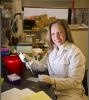
Biology Professor Ann Morris' lab contains approximately 200 individual fish tanks, but only one type of fish.

Having recently secured a $1 million grant from the National Institutes of Health (NIH), Morris will continue investigating zebrafish and the insight they offer in regard to solutions for human retinal degeneration. The NIH grant, titled, “The role of insm1 in vertebrate photoreceptor differentiation,” will be funded over five years and focuses on zebrafish to better understand genetic pathways that control the development of the retina.

"Mammals cannot regenerate photoreceptors, because the retina is part of the central nervous system, and like other neurons in the brain, when you damage them you can't replace them," Morris said. "So that means when people get genetic diseases where the neurons, particularly the

By Sarah Geegan

The University of Kentucky BiologyPhysics and AstronomyChemistry, and Psychology departments are reaching out to area high school science teachers and teaching them something new: what's new in science.

The What's New in Science series, an outreach program aimed to strengthen UK's relationships with high school science programs, will engage teachers and youth in various scientific areas. It will focus specifically on emerging discoveries and developments in the realm of science.

"The university already has a strong history in supporting science teachers in Kentucky Schools," said 

 

By Sarah Geegan


In February, area high school teachers gathered twice at the University of Kentucky to learn about recent scientific discoveries and breakthroughs, specifically in the fields of chemistry, physics and astronomy. On Thursday, March 22, the College of Arts and Sciences will offer a biological perspective on "What's New in Science."

Biology professor Randal Voss will lead the third forum in the What's New in Science series, an outreach program aimed to strengthen UK's


The annual Darwin Lecture Series will feature Eugenie C. Scott, who will present a lecture titled "Darwin: Demon or Revolutionary?" Presented by the Kentucky Section of the American Institute for Professional Geologists, the lecture will be presented at 7 p.m. Thursday, Feb. 16, at Singletary Center for the Arts Recital Hall.

Scott is the executive director at The National Center of Science Education at the University of Missouri. She has been a researcher and activist in the creationism/evolution conflict for over 25 years, and is able to address the variety of different aspects the conflict entails.

The sponsors for the lecture include:

Kentucky Academy of Science UK Department of Earth and Environmental Sciences Kentucky Society of Professional Geologists Morehead


By Whitney Hale, Photo by Matt Barton, UK College of Agriculture

The Astronaut Scholarship Foundation (ASF) has selected University of Kentucky senior Taylor Lloyd, of Union, Ky., as one of this year's 26 recipients of the prestigious $10,000 scholarship. The ASF Scholarship is presented to outstanding college students majoring in science, technology, engineering or math.

"Taylor is an extraordinary student who shows incredible success in her studies and undergraduate research," says UK President Eli Capilouto. "We are thrilled to see her hard work recognized by the Astronaut Scholarship Foundation. We believe she will be a major contributor to her field in the future, and this scholarship will help make that possible."