"Circadian Clocks and Their Impact on Metabolism, Aging and Longevity"

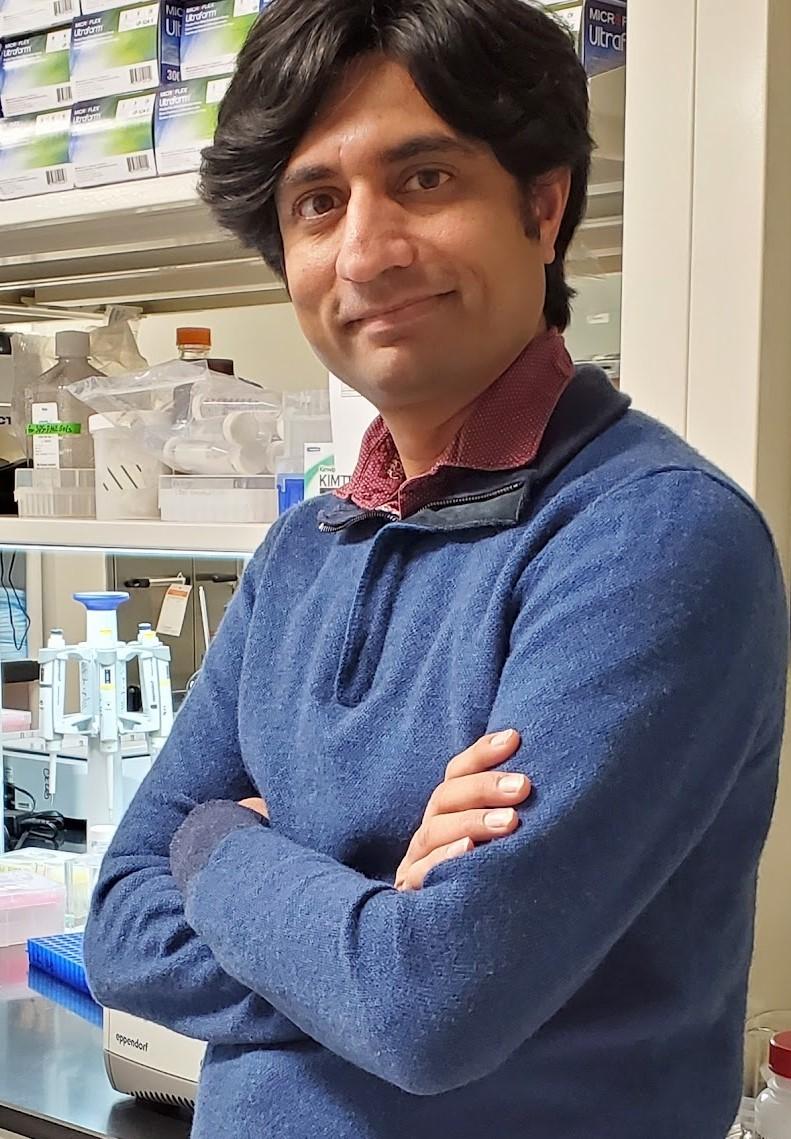
Dr. Joseph Takahashi | Takahashi Lab
Bio:
Joseph S. Takahashi is the Loyd B. Sands Distinguished Chair in Neuroscience, Investigator Emeritus in the Howard Hughes Medical Institute, and Chair of the Department of Neuroscience at the University of Texas Southwestern Medical Center in Dallas. He joined UT Southwestern in 2009. Takahashi was born in Tokyo, Japan (US Citizen) and grew up in Burma, Italy and the Maryland suburbs of Washington, DC. He graduated from Swarthmore College, Pennsylvania, with a BA in Biology; did his graduate studies with Michael Menaker at UT Austin and University of Oregon, Eugene (PhD in 1981). He was a Pharmacology Research Associate at the NIMH and joined the faculty of Northwestern University in 1983, where he was the Walter and Mary Elizabeth Glass Professor in the Life Sciences at Northwestern University. During his 26-year tenure at Northwestern, he held appointments as professor in the Department of Neurobiology on the Evanston campus and director of the Center for Functional Genomics.
His research interests are the molecular mechanism of circadian clocks, the genetic basis of behavior, and the role of circadian clocks in regulating metabolism, aging and longevity. Dr. Takahashi pioneered the use of forward genetics in the mouse as a tool for discovery of genes underlying neurobiology and behavior, and his discovery of the mouse and human Clock genes led to a description of a conserved circadian clock mechanism in animals. He has gone on to demonstrate critical physiological roles of the clock in metabolism, genome-wide gene expression and epigenetics. Recently he has discovered key roles for circadian clocks in parasitic diseases such as sleeping sickness and malaria. In the field of aging, his lab has recently shown that circadian alignment of feeding under caloric restriction is a major factor in lifespan extension in mice. He is the author of more than 340 scientific publications and the recipient of many awards including the Honma International Prize in Biological Rhythms Research in 1986, W. Alden Spencer Award in Neuroscience from Columbia University in 2001, Eduard Buchner Prize from German Society for Biochemistry and Molecular Biology in 2003, Outstanding Scientific Achievement Award from the Sleep Research Society in 2012, and the Gruber Neuroscience Prize from the Gruber Foundation and the Society for Neuroscience in 2019 (the top award in the field of neuroscience in the USA). He was selected as a Thomson Reuters Highly Cited Researcher in Biology and Biochemistry in 2014 and 2019, and Web of Science Highly Cited Researcher in 2019-2021. He was elected a Fellow of the American Academy of Arts and Sciences in 2000, a Member of the National Academy of Sciences in 2003, and a Member of the National Academy of Medicine in 2014.
Takahashi has served on a number of advisory committees for the National Institutes of Health, as well as scientific advisory boards for Eli Lilly and Company, the Genomics Research Institute for the Novartis Foundation, The Klingenstein Fund, the Searle Scholars Foundation, the McKnight Foundation, the Allen Institute for Brain Science, the Max Planck Institute for Biophysical Chemistry, the Bristol-Myers Squibb Neuroscience Award Selection Committee, INSPIRE Servier International, and the Restless Legs Syndrome Foundation. He is/was a member of the editorial boards for PNAS, eLife, PLoS Genetics, Neuron, Aging Cell, Curr Opin Neurobiol, Physiological Genomics, J. Biol. Rhythms, Genes Brain Behav, and the Faculty of 1000. He was also a co-founder of Hypnion, Inc., a biotech discovery company in Worcester, Mass., that investigated sleep/wake neurobiology and pharmaceuticals (now owned by Eli Lilly and Co.), and was a co-founder of Reset Therapeutics, Inc., a biotech company that worked on the role of clocks in metabolism. He is a co-founder of Synchronicity Pharma, a biotech company working on the role of circadian clocks in sleep disorders and cancer.
Abstract:
Genetic analysis of circadian behavior in mice has revealed that the molecular basis of circadian clocks involves an autoregulatory transcriptional network that oscillates with a 24-hour periodicity. In mammals, the discovery of “clock genes” led to the realization that circadian clocks are cell autonomous and are expressed in the majority of cells and tissues in the body. The master circadian pacemaker located in the hypothalamic suprachiasmatic nucleus sits at the top of a hierarchy of oscillators in the body, but peripheral oscillators can and do respond to more proximal signals such as nutrients and metabolites. Thus, the “circadian system” in mammals is a multi-oscillatory hierarchy. In addition to controlling the timing of behavior and physiology, the circadian clock gene network interacts directly with many other pathways in the cell. These include metabolism, immune function, cardiovascular function, cell growth, as well as, the majority of the “hallmarks of aging” pathways. With respect to metabolism, the timing of nutrient consumption is critical, and we and others have shown that restricting the timing of feeding has many health benefits. We have found that time restriction and circadian alignment of feeding are critical factors for extension of lifespan under caloric restriction. Because the circadian gene network is a conserved regulator of aging and longevity in mice and humans and because circadian transcriptional drive declines with age, we are testing interventions that rescue circadian amplitude as agents to promote healthspan and lifespan. We propose that the circadian gene network is a novel target for aging and longevity.
Watch the seminar here!